

Malawi Energy Regulatory Authority
The Malawi Energy Regulatory Authority (MERA) is a corporate body that was established under the Energy Regulatory Act No. 20 of 2004 as the Energy Sector Wide Regulator and its mandate is to regulate the Energy Sector in Malawi in a fair, transparent, efficient and cost effective manner for the benefit of the consumers and operators.
In order to efficiently deliver on its Mandate, MERA initiated a number of reforms as part of the Malawi Public Sector Reforms Programme that was launched by His Excellency President Professor Arthur Peter Mutharika in February 2015.
MERA initiated the following reforms:
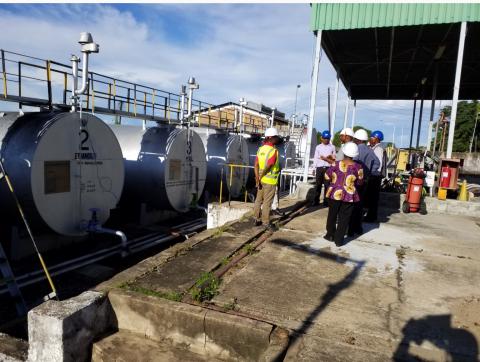
Development of a regulatory framework for management of strategic fuel reserves and Creation of an Independent Petroleum Importation Coordinator
This reform was initiated to establish legal framework for an independent petroleum importation coordinator; opportunities for economies of scale and affordable entry requirements for small scale operators.
The reason behind this reform was to increase participation of industry players in the Fuel and Energy Sector hence increased competition and job creation by new entrants and improved efficiency through economies of scale.
Progress
- Prepared Liquid Fuels and Gas Bulk Procurement and Strategic Fuel Reserve Storage Regulations in collaboration with NOCMA where NOCMA was designated as the Sole importer of fuel as well as the Manager for Strategic Fuel Reserves.
- The Regulations were submitted to Ministry of Justice for consideration and finalisation in July 2016;
- Strategic Fuel Reserves Management Regulations gazetted on 12th June 2018.
- Energy Policy reviewed and passed by Government for implementation.
Develop regulatory tools in contribution to the creation of a framework for Independent Power Producers (IPPs); and Review draft framework for Independent Power Producers (IPPs).
This reform was initiated to create an enabling framework and a level playing field for Independent Power Producers (IPPs) to improve efficiency, effectiveness, quality of service and reliability in the electricity supply industry.
The aim of this reform is to increase private sector participation in energy supply and ensure competitiveness.
Progress
- MERA approved the tariff methodology, among other regulatory tools.
- A peer review was done of MERA regulatory tools: Power Purchase Agreements (PPAs); Grid Code; Renewable Energy Feed in Tariffs (REFTs); Renewable Power Plant Connection Code; Transmission Connection Agreement; Tariff Methodology; Market Rules, Market Procedures; and Distribution Code.
- Several PPAs received from ESCOM and reviewed.
- Development of a framework for solicited and unsolicited independent power producers (IPPs and UIPPs, respectively) was done and approved by Government.
- The Electricity (Amendment) Act 2016 was passed by Parliament in June 2016 and assented to by the President in August 2016.
- Following the unbundling of the Electricity Supply Industry (ESI), new licensees were created within ESCOM comprising System Market Operator (SMO) and Single Buyer (SB).
- MERA developed licensing conditions for Single Buyer and System Market Operator which were approved by the Board.
- MERA created a Grid Code Technical Committee (GCTC) and Market Rules Review Panel to register Market Participants and provide a forum for resolving operational and market issues.
Looking at the reforms initiated and progress made, MERA is doing a commendable job in undertaking its reforms.
Add new comment