

Roads Fund Administration
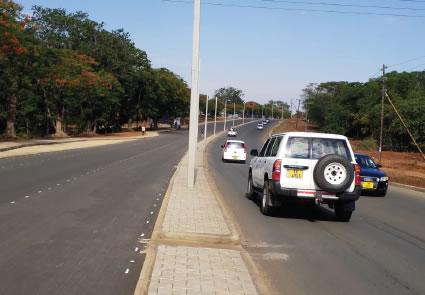
The mandate of Roads Fund Administration (RFA) is to raise, administer and account for funds for construction, maintenance and rehabilitation of public roads.
In achieving this mandate, RFA adopted several reforms under the Public Sector Reforms Programme championed by His Excellency President Professor Arthur Peter Mutharika. The Reform Areas by RFA are as follows:
Introduce Road Access Fees
The objective of this reform is to enhance the Roads Fund income earnings base. Previously, the country was not charging any fees to foreign registered saloon vehicles entering Malawi but only bigger vehicles which pay International Transit Fees.
The Road Access Fees were gazetted and this reform was rolled out from 1st November 2017 and currently, RFA is collecting an average of K22 million per month from the fees. Just like on International Transit Fees, the collection of Road Access Fees has been outsourced to the Malawi Revenue Authority (MRA).
Automate RFA Payment Systems
This reform was undertaken to enhance operational efficiencies of the RFA and service delivery standards in respect of contractors’ payment systems with expected benefits of, reduced payment turnaround time from 7 working days to 4 working days and reduced stationery and related costs by 20% (at least MK15 million per year).
This reform dubbed Sunflow System was rolled out on 1st July 2018 and integrated RFA’s payment and general ledger application systems and has resulted to, timely processing of payments and reduction in the payment’s turnaround time from 7 days to 5 days; direct payments to contractors through Electronic Funds Transfers (EFT) and reduced number of documents being printed hence savings in stationery related costs.
Introduce Automated Fuel Levy Adjustment
The main objective of this reform is to preserve the value of the fuel levy rate by changing the fuel levy rate structure from an absolute figure per litre to a percentage of the pump price.
This reform was rolled out effective 1st July 2015, where fuel levy is being calculated as a percentage of the In-Bond Landed Cost (IBLC). Moreover, annual fuel levy collections have significantly and steadily increased from MK11 billion in 2014/15 (before the reforms) to MK20 billion in 2015/16; MK27 billion in 2016/17 and MK31 billion in 2017/18 after the reforms.
Introduce Roads Fund Bond
The objective of this reform is to frontload financing of periodic maintenance of paved roads so that the public should enjoy the benefits whilst payment is made over a period of time.
This reform was rolled out and a total of MK7 billion was raised from NBS Bank Limited for the construction of a dual carriageway from Area 49 – Area 18 – Parliament Building Roundabout. The bond will be repaid over a period of 5 years at interest rate referenced to a 90-day Treasury Bill plus 1.75%.
An additional MK3 billion has been raised from NBS Bank Limited for the construction of a Clover Leaf Interchange to replace the Area 18 roundabout.
Introduce Toll Fees
This reform was identified to broaden and diversify the Roads Fund revenue base with expected benefits to raise at least K7.0 billion annually for the Roads Fund. Through The Ministry of Transport and Public Works, it was agreed that a pilot toll gate be constructed to toll one of the country’s roads using RFA’s own resources and personnel. In this regard, a Consultant is currently preparing designs and bid documents to toll a section of the M1 road (between Chingeni and Zalewa).
Looking at the reforms initiated and progress registered, Roads Fund Administration has done a commendable job undertaking Reforms that were launched by His Excellency President Professor Arthur Peter Mutharika on 11 February, 2015.
Feedback: opcreforms@gmail.com
Add new comment