
Lilongwe Water Board
Lilongwe Water Board (LWB) was established in 1947 with a primary Mandate to supply potable water to the City of Lilongwe and its surrounding areas. LWB serves over 800,000 residents within the City of Lilongwe and other designated supply areas, operates and maintains three (3) Water Treatment Plants and delivers water through an estimated 1814 Kilometers of pipelines.
In order to improve its service delivery to the general public, LWB undertook several reforms as part of the Public Sector Reforms Programme that was launched in February 2015 by His Excellency President Professor Arthur Peter Mutharika. The Reforms undertaken by Lilongwe Water Board are as follows:
Reduce Non-Revenue Water
Under this Reform, LWB developed a Non-Revenue Water Strategy, entered a Performance Based Water Operating Partnership (PBWOP) Contract with international water operator, Vitens Evides International (VEI), Established District Metered Areas (DMAs), is implementing leak detection activities in DMAs, established a modern Call Centre, is lowering exposed water pipes and replacing old pipes and is installing advanced reservoir level monitoring equipment to avoid overflows.
Moreover, LWB is also conducting a meter replacement program targeting 4,000 water meters and is also con-ducting house to house surveys to eliminate illegal connections.
Following this Reform, the monthly Non-Revenue Water moved down from 35.1% reported in July to 27.2% in August 2018, and the annual rolling average also moved down from 41.1% in July to 40.6% in August 2018.
Develop Management Information System (MIS)
Undertaking this reform, LWB conducted a user needs analysis with assistance from VEI and the project scope later changed to an Enterprise Resource Planning (ERP) System which is an enterprise application that integrates all department functions into a single software application and allows tracking and monitoring of a company’s resources and business processes.
With the ERP, the CEO and top management are able to monitor activities taking place in all the sections of LWB i.e. sales, finance, purchasing, inventory and general work output.
Establishment of 24/7 Call Center
The Call Center that is now fully operational was created to provide a platform for customers where they can communicate, ask questions, report faults and provide any information that would result in the board addressing their concerns thereby satisfying their needs.
The Call Center operates 24 hours with members of staff taking shifts and is highly modernized recording all data collected and feeding it into the LWB system where queries are attended to promptly.
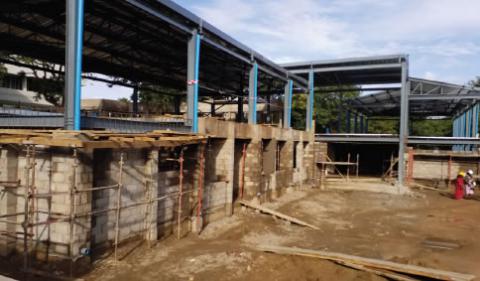
Construction of Modern Office Complex
The project objective is to have a new office complex in Lilongwe comprised of office blocks, modern training facilities and a fitness complex among other structures that will promote an open work culture through the modern offices that; have no barriers, promote skills development, improve LWB’s image and provide a decent work environment.
The K1.1 billion project is being constructed by LWB generated funds and is already at an advanced stage and is earmarked for completion in March next year.
Development of Lake Malawi Water Source for Lilongwe
This long-term reform was introduced after LWB realised that its water production and supply capacities are not meeting the current water supply needs in Lilongwe City and surrounding areas.
The identification of Lake Malawi as a raw water source for water supply, hydropower generation and irrigation will help supply water to Lilongwe City and the surrounding areas providing water security beyond the year 2045.
All modalities by LWB are in place awaiting the roll out of the project.
Looking at the reforms initiated and progress registered, Lilongwe Water Board is doing a commendable job in undertaking reforms championed by His Excellency President Professor Arthur Peter Mutharika.
Feedback: opcreforms@gmail.com
Add new comment